The Ultimate Travel Packing Guide 2026: What to Pack, How to Pack It, and What to Leave Behind
Not another one-line packing checklist. A real deep dive on what to pack, which packing method actually works, and why almost everyone brings too much.
The Ultimate Travel Packing Guide 2026: What to Pack, How to Pack It, and What to Leave Behind
Everyone overpacks once. Most people keep doing it for years.
This isn't a one-line "don't forget your charger" list — that's already covered in our full pre-trip checklist. This is the deep dive on packing itself: how much to actually bring, which packing method really works, how your list should change by climate and trip length, and the specific mistakes that make suitcases heavier than they need to be.
The Core Principle: Pack for the Trip You're Actually Taking
Most overpacking comes from packing for an imagined version of the trip, not the real one. The "just in case" outfit. The shoes for an activity you're 30% likely to do. The book you won't read because you'll be too busy exploring.
The fix isn't a stricter list — it's a stricter question for every item: will I use this in the first three days? If not, it's the first thing to cut.
Capsule Wardrobe: The Actual Math
A capsule wardrobe means fewer pieces that combine into more outfits, instead of one outfit per day.
For a one-to-two week trip, a realistic capsule looks like:
- 4-5 tops
- 2-3 bottoms (pants/skirts/shorts depending on climate)
- 1 layering piece (light jacket, cardigan, or fleece)
- 1 "nice" outfit for a dinner out or event
- 5-7 sets of underwear and socks (hand-wash the rest if needed)
- 1-2 pairs of shoes, maximum three
That's roughly 12-15 clothing items that mix into 20+ outfit combinations — enough for a two-week trip without ever repeating an identical look twice in a row.
For longer trips (3+ weeks or long-term travel): don't scale the wardrobe up proportionally. Add laundry into your routine instead — most hostels, guesthouses, and even many hotels offer it. A traveler who does laundry once a week needs almost the same wardrobe size for a 3-month trip as a 2-week one.
Packing Methods, Actually Compared
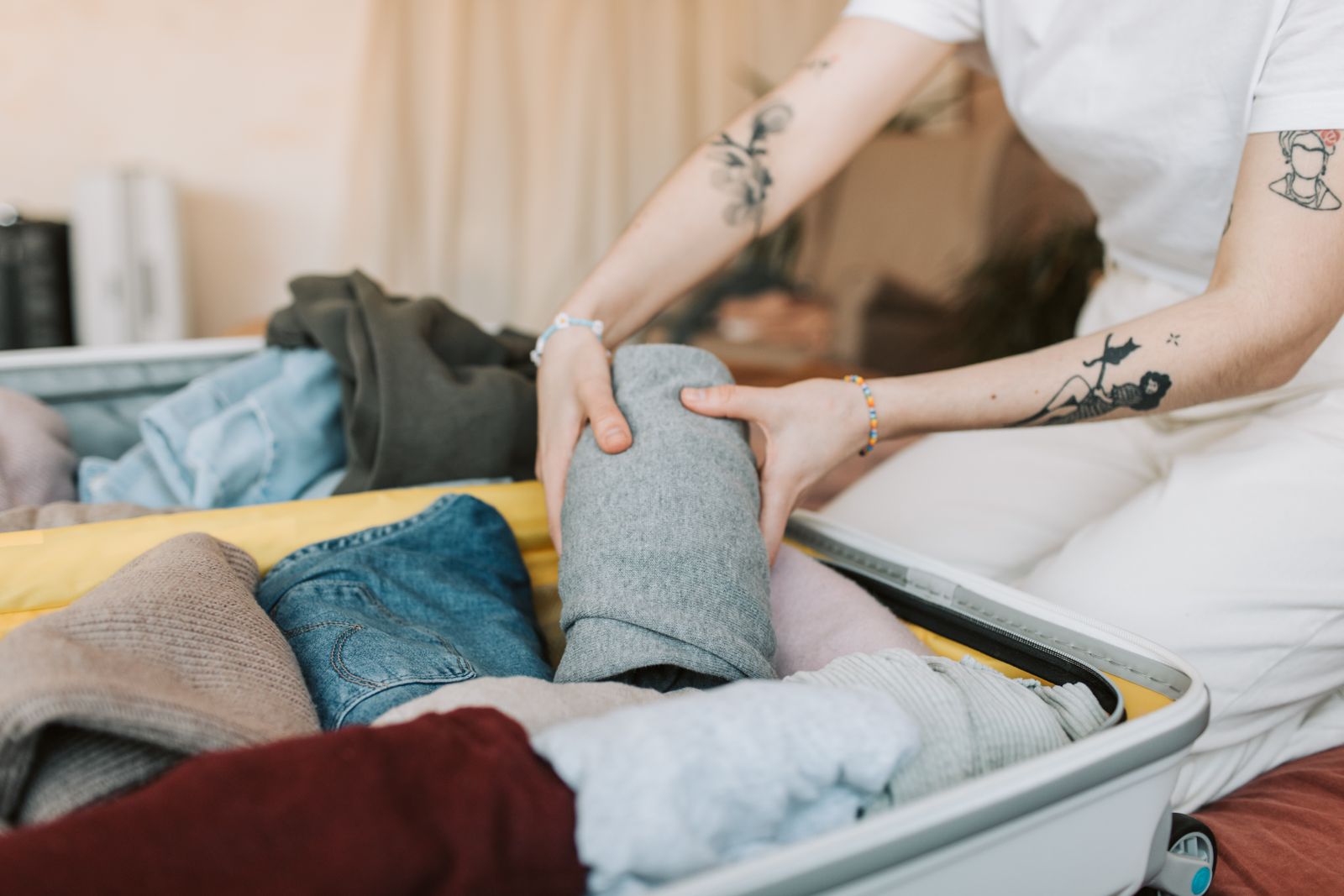
Rolling clothes: Saves space compared to folding flat, and reduces some wrinkling. The default method for most experienced travelers.
Packing cubes: Don't save significant space on their own, but they save real time and sanity — separate cubes for tops, bottoms, and underwear mean you're not unpacking your entire bag to find one shirt. Worth the investment for anyone who travels more than occasionally.
Compression bags: Genuinely reduce volume for bulky items (jackets, sweaters), at the cost of adding weight from the bag itself. Most useful for cold-climate trips where bulky layers are unavoidable.
The bundle method (wrapping smaller items around a core of larger ones): Reduces wrinkling better than rolling, but takes practice and isn't worth learning unless you're packing formal wear regularly.
Our actual recommendation: packing cubes for organization, rolled clothes inside them, compression only for genuinely bulky cold-weather items. Skip the rest.
Carry-On Only vs. Checked Bag
Carry-on only works well for: trips under 10 days, warm-climate destinations, and travelers who prioritize mobility (skipping baggage claim, no lost-luggage risk, easier last-minute city changes).
Checked luggage makes more sense for: cold-climate trips requiring bulky layers, trips longer than two weeks without laundry access planned, or anyone bringing specific gear (hiking boots, diving equipment, a laptop plus camera gear).
If you're aiming for carry-on only, the real constraint usually isn't clothing — it's liquids and electronics. Solid toiletries (shampoo bars, solid perfume, powder sunscreen) free up an enormous amount of your 100ml liquid allowance.
Climate-Specific Packing
Hot / tropical climates: Breathable natural fabrics (cotton, linen) over synthetic blends. A light rain layer even in dry season — tropical weather changes fast. Reef-safe sunscreen if you'll be near coral. A sarong or light scarf doubles as beach cover-up, sun protection, and modest dress for temples or religious sites.
Cold climates: Layering beats one heavy item — a base layer, mid layer, and outer shell adapts to a wider temperature range than a single thick coat. Merino wool base layers regulate temperature better than cotton and don't hold odor as fast, useful if laundry access is limited.
Four-season / unpredictable climates: This is where compression bags earn their keep. Pack for the coldest realistic day and the warmest realistic day, and plan to layer for everything in between rather than packing a separate outfit for every possible temperature.
Rainy season / monsoon destinations: A proper rain jacket beats an umbrella for mobility. Quick-dry fabrics matter more here than almost anywhere else — nothing ruins a trip faster than clothes that won't dry between wears.
Trip-Length Specific Lists
Weekend (2-3 days): Carry-on or even personal-item only is realistic. 2-3 outfits, one pair of shoes beyond what you're wearing, minimal toiletries.
One week: The full capsule wardrobe above, one checked bag or a larger carry-on, laundry not necessary.
Two-plus weeks: Same capsule wardrobe, plan for one laundry day around the midpoint rather than packing double.
Long-term / digital nomad travel: Pack as if you're doing a one-week trip on repeat. Bring less than feels comfortable — almost everything is replaceable on the road, and you'll actually acquire things along the way that fill gaps you didn't anticipate.
Tech & Electronics
- A universal adapter beats a country-specific one if you're visiting multiple regions
- One power bank is enough for most trips; two is overkill unless you're off-grid for extended stretches
- A multi-port charging cable (USB-C to multiple ends) reduces cable clutter significantly
- Download offline maps, translation, and entertainment before you lose reliable signal — don't rely on arrival Wi-Fi
- If you're bringing a laptop for remote work, a slim protective sleeve adds real protection for negligible weight
Toiletries & the TSA Liquid Rules That Still Trip People Up
Standard international carry-on liquid limits allow containers of 100ml/3.4oz or less, all fitting in a single clear quart-sized bag. The mistake isn't the limit — it's forgetting it exists until the security line.
Easy fixes: solid shampoo/conditioner bars, solid perfume or cologne, powder or stick sunscreen, and toothpaste tablets all sidestep the liquid rule entirely, freeing up your allowance for anything that genuinely has to stay liquid (contact lens solution, specific skincare).
The Overpacking Mistakes Almost Everyone Makes
- Packing for "what if" scenarios that have a low chance of actually happening
- Bringing a separate outfit for every day instead of a capsule that mixes and matches
- New shoes — always break them in before a trip, never during one
- Full-size toiletries for a one-week trip
- Backup electronics you already have a backup for (two power banks, two chargers for the same device)
- "Just in case" formal wear for a trip with no formal occasion planned
- Books or physical entertainment that a phone or e-reader already covers
Packing for Solo Travel Specifically
A few things matter more when you're traveling alone, with nobody to split the load or watch your bag while you find a bathroom:
- Prioritize a bag you can carry and maneuver by yourself, fully loaded, up stairs, without help
- A daypack with a lockable zipper or slash-resistant strap adds real peace of mind in crowded areas
- Pack a doorstop alarm or portable door lock if you're staying in budget accommodations with less reliable security
- Keep a small backup cash stash separate from your main wallet, in case of loss or theft
- A whistle or small personal alarm takes up no meaningful space and adds a real safety option
Why We Built Your Travel Pals
A great packing list gets your bag ready. It doesn't solve who you'll meet once you land, or how the actual days of your trip come together.
That's where our AI trip planner picks up — building the itinerary around what's actually in your suitcase and your travel style — alongside verified travel companions if you don't want to figure it all out alone.
Join the waitlist or take the Travel DNA quiz to see what the rest of the trip looks like.
Frequently Asked Questions
What's the biggest packing mistake most travelers make?
Packing for imagined "what if" scenarios instead of the trip they're actually taking — extra outfits, backup electronics, and formal wear for occasions that don't exist on the actual itinerary.
Are packing cubes actually worth it?
They don't save significant space, but they save real time and organization — separating categories of clothing means not unpacking your whole bag to find one item. Worth it for anyone who travels more than occasionally.
How do I pack for a trip with unpredictable weather?
Layer instead of packing separate outfits for every possible temperature. Pack for the coldest and warmest realistic days, and plan to layer for everything between.
Can I really do carry-on only for a two-week trip?
Yes, for most warm-climate trips with laundry access planned around the midpoint. Cold-climate trips with bulky layers usually need checked luggage instead.
What should solo travelers pack that others might not think about?
A bag they can fully manage alone, a lockable daypack, a backup cash stash separate from the main wallet, and a small personal alarm — none of which take up much space, but all of which matter more without a travel companion to rely on.
Final Thoughts
The best packing list isn't the longest one — it's the one where everything gets used. Pack for the trip on your actual itinerary, not the one you're imagining might happen, and you'll land with a bag that's easier to carry and a suitcase you're not wrestling with by day three.
Related Articles
- The Ultimate Solo Travel Checklist: 75 Things Every Traveler Should Do Before Every Trip
- How to Find Safe Travel Buddies Around the World
- 25 Common Travel Mistakes That Ruin Trips (And How to Avoid Them)
- Digital Nomad Life in 2026: The Complete Beginner's Guide to Working and Traveling the World